
Even gardeners with green thumbs are sometimes at a loss when it comes to sick plants. Some plants fail to thrive or simply die, even though they receive the best care and attention. The good news is that there is a diagnostic service offered by the Sydney Royal Botanic Gardens to help you identify the pest or disease that’s killing your plant.
Plant doctors
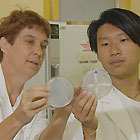
The Plant Disease Diagnostic Service is available to both commercial and home gardeners. In the past little was known about plant diseases and there wasn’t much gardeners could do except watch their plants wither and die. This is changing as the understanding of plant pathology increases. According to Dr Brett Summerell and his team at the Plant Disease Diagnostic Service, the work combines both cutting-edge laboratory work and good old kitchen-sink science.
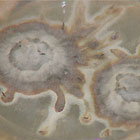
The first step is a close inspection of the plant. If they suspect that the problem is a fungal disease, the next step is to try and isolate the fungus from the root. That involves cutting the root into small pieces and placing the pieces on various types of agar medium in Petri dishes. This allows the fungus to grow so that it can be easily identified.
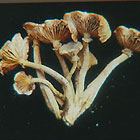
armillaria fungus
Many fungi that cause plant disease are microscopic and live underground. An example is the armillaria fungus (Armillaria luteo bubalina) which sends up a toadstool near the base of the affected plant. This toadstool is the sexual organ of the fungus and therefore similar in function to a flower. It is also the most obvious indication of this fungal disease along with the plant’s waning health.
toadstool Sending your plants
The Royal Botanic Gardens in Sydney also offers a Plant Identification Service, where specimens may be sent in by the public for identification. Packaging your plants correctly is vital when sending specimens to either the Plant Disease Diagnostic Unit or the Plant Identification Unit. Many specimens arrive at the Botanic Gardens in an unrecognisable state due to mould and rot. The main reason is that plants have been sent in plastic bags or other plastic packaging. Condensation inside the bag often results in a smelly and mushy mass in the mail for the Botanic Gardens staff, so if you are sending specimens, do not use plastic wrapping.
Sending specimens
Don’t hesitate. Delaying identification (and treatment) can be costly, both for your plants and your pocket. Trees are particularly expensive to treat, so it’s better to catch the problem early. Include as many parts of the plant as possible. Flowers and leaves are usually the most important identifying features. For disease identification, also include some root material and surrounding soil. Place the specimens into a brown paper bag, envelope, kitchen towelling or even newspaper. Make sure the plant material won’t be flattened or squashed in any way during delivery. Deliver in person, use a courier or mail your specimens as long as they won’t deteriorate in transit. Careful packing and a special overnight mailing service should reduce the risk of damage.
Further information
Our segment was filmed with Dr Brett Summerell, Plant Pathologist and Manager, Conservation and Horticultural Research, Plant Sciences, Royal Botanic Gardens, Sydney.
To have a problem identified contact:
Plant Disease Diagnostic Unit
To have a plant identified contact:
Plant Identification Service
Both can be reached at:
Botanical Information Service
Royal Botanic Gardens Sydney
Mrs Macquaries Rd
Sydney, NSW, 2000
Phone: (02) 9231 8189; (02) 9231 8186
Fax: (02) 9241 1135
Email: [email protected]
Charges: Disease diagnosis -$50; Isolating pathogen – $80; Pest identification – $50; Consultancy rate – $120 per hour; Plant identification – fee for service. GST not included in prices quoted.
Other plant diagnostic centresAustralia-wide service available on fee for service basis for pests and diseases:
Institute for Horticultural Development
Crop Health Services
Private Bag 15
Scoresby Business Centre, VIC, 3176
Phone: (03) 9210 9356
Fax: (03) 9887 3166
or take it to:
Crop Health Services
621 Burwood Highway
Knoxfield, VIC, 3180
between 8.30am – 4.30pm (Monday to Friday)
Plant Identification Service
National Herbarium of Victoria
Royal Botanic Gardens
Birdwood Avenue
South Yarra, VIC, 3141
Phone: (03) 9252 2315
Queensland
Department of Primary Industries has a free home garden advice line and a fee for diagnostic service for pests and diseases (Grow Help Australia)
Phone the Call Centre on 13 25 23
Plant Identification Service
Brisbane Botanic Gardens
Mt Coot-tha, QLD, 4066
Phone: (07) 3403 2531
WA
Plant identification of native species only at
CALM Herbarium
George Street
Kensington, WA, 6151
Phone: (08) 9334 0500